

Loose aggregate rarely keeps the same volume after crews spread, grade, and compact it. Pressure removes air pockets, rearranges particles, and lowers the finished surface, which means a delivered load may cover less area than expected. Understanding that change helps contractors and property owners order enough material for a stable base, trench, pad, or finished grade.
Why Delivered Volume Shrinks During Compaction
Freshly dumped stone or soil contains open spaces between particles. Equipment closes many of those gaps by pressing the material into a denser arrangement, causing the layer to lose height without actually losing mass.
Compaction rates vary because each product has a different mix of particle sizes, moisture, shape, and density. Customers searching for gravel delivery near me should base their order on the required finished depth rather than the loose depth seen immediately after unloading.
Rock Shape Changes How Tightly Material Packs
Angular crushed stone locks together as sharp edges press against nearby pieces. Graded products that include several sizes often compact firmly because smaller particles fill openings between larger rock.
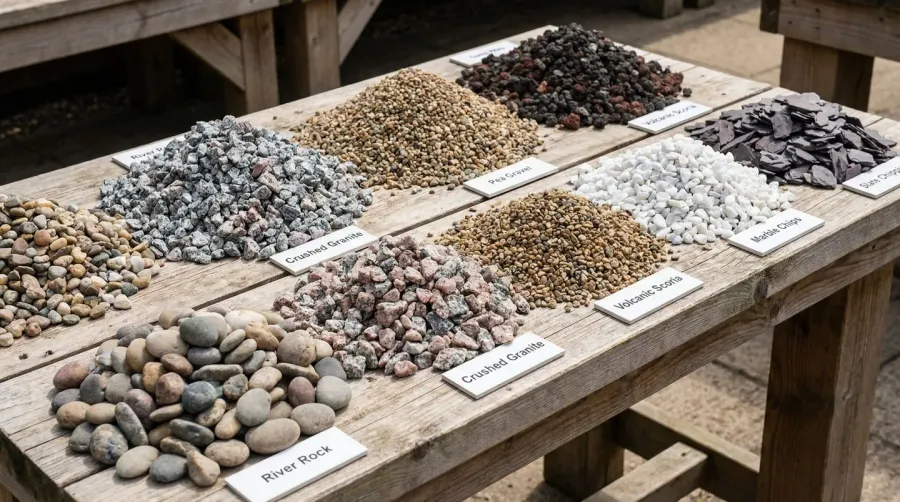
Rounded gravel behaves differently since smooth pieces roll and shift instead of gripping one another. Buyers comparing gravel for sale should ask whether the material is intended for structural compaction, drainage, decoration, or surface coverage because each use calls for a different particle arrangement.
Soil Type Has a Major Effect on Settlement
Sandy fill usually compacts more predictably than soil containing large clay clumps or organic matter. Granular particles rearrange under pressure and release trapped air without relying heavily on long drying periods.
Clay requires closer moisture control because material that is too wet smears and pumps under machinery. Dry lumps may resist crushing and leave hidden voids. People reviewing rock and dirt for sale should describe whether the fill will support a slab, raise a grade, backfill a trench, or simply shape landscaping.
Moisture Determines How Well Dirt Compacts
Slight moisture helps soil particles slide into a tighter position during rolling or tamping. Completely dry material may remain loose, while saturated fill can deform beneath each equipment pass.
Field crews often adjust water content before compaction begins. Weather conditions also matter, particularly after heavy rain or during hot periods when exposed soil dries quickly. Proper timing prevents repeated work and reduces the risk of building over unstable layers.
Loose Depth Is Not the Finished Depth
A six-inch loose lift may settle noticeably after compaction, depending on the product and equipment used. Projects that require a precise finished elevation therefore need extra material above the simple length-times-width calculation.
Allowances should reflect expected shrinkage, uneven subgrade conditions, and minor loss during spreading. Contractors scheduling gravel delivery in Huntsville AL often order by compacted project needs while using supplier estimates to account for the material’s typical behavior.
Thin Lifts Produce More Consistent Density
Deep piles are difficult to compact evenly from top to bottom. Machinery may harden the surface while leaving loose pockets underneath, creating future settlement beneath driveways, patios, retaining walls, or building pads.
Crews usually spread material in controlled lifts and compact each layer before placing the next. Lift thickness depends on particle size, soil type, equipment weight, and project specifications. Careful layering creates a more uniform foundation than trying to compress the full depth in one pass.
Compaction Equipment Must Match the Material
Plate compactors work well in confined areas and on thinner aggregate layers. Vibratory rollers cover wider surfaces efficiently, while jumping-jack tampers can perform better in narrow trenches or cohesive soils.
Machine weight and vibration frequency influence how deeply compactive force travels. Oversized equipment may damage nearby structures, yet undersized machinery can leave the lower layer loose. Experienced operators select equipment according to the material rather than using the same method for every job.
Drainage Stone and Base Rock Compact Differently
Washed drainage gravel contains few fines, so it retains open spaces that allow water to move. Although placement settles the stones, the finished layer should not become as dense as a road-base mixture.
Crusher run and dense-grade aggregate contain smaller particles designed to fill voids and bind the surface. Those products compact more tightly and lose more loose volume during installation. Planned rock and dirt delivery should keep drainage materials separate from structural base products to preserve the intended performance of each layer.
Accurate Ordering Prevents Material Shortages
Project measurements should include length, width, planned compacted depth, and any low areas that require extra fill. Slopes, trenches, irregular boundaries, and soft spots can increase volume beyond a basic rectangular estimate.
North Alabama Rock & Dirt provides gravel, crushed stone, fill dirt, topsoil, and aggregate delivery for driveways, drainage systems, grading, foundation work, landscaping, and construction projects throughout the Huntsville area. Its rock and dirt delivery options help homeowners and contractors coordinate appropriate materials and load quantities while accounting for compaction, final elevation, and site conditions.